Traditional Drug Delivery vs. CSTDs - What’s the Difference?


For healthcare professionals, working with hazardous drugs includes the ever-present risk of occupational exposure. When handling hazardous drugs, especially in oncology and sterile compounding, the chosen tools can directly impact safety and compliance as well as patient outcomes.

Traditional drug transfer methods may still be in use in some healthcare settings, despite the well-documented risks they carry. Closed System Drug-Transfer Devices (CSTDs) were specifically developed to reduce risk related to exposure to cytotoxic drugs, bring hazardous drug handling into the modern age and provide safety and confidence for healthcare workers.

So what is the real difference between CSTDs and other systems?

<h1 class='fix-title'>Traditional Drug Delivery vs. CSTDs - What’s the Difference?</h1>

What is a CSTD?

The US National Institute for Occupational Safety and Health (NIOSH) defines a Closed System Drug-Transfer Device (CSTD) as “a drug transfer device that mechanically prohibits the transfer of environmental contaminants into the system and the escape of the hazardous drug or vapor concentrations outside the system”.

To reduce the risk of hazardous drug exposure and protect healthcare workers while handling cytotoxic medications, CSTDs are required in the US (e.g., USP <800>) and strongly recommended by other regulatory and health authorities such as EU and the UK health authorities.

The Smart Way to Handle Hazardous Drugs

Medications like chemotherapy and certain antibiotics play a vital role in modern medicine, but they also come with significant risks for those who handle them. In addition, monoclonal antibodies (mAbs) also pose potential risks. Whether during mixing, preparing, or administering these drugs, there’s a real danger of exposure, especially if leaks or aerosolization occur.

Healthcare workers like pharmacists, nurses and even veterinarians face daily exposure risks through inhalation, skin contact, accidental ingestion or needle stick injuries. And the danger doesn’t stop there. Drug leaks can put other healthcare staff, patients and visitors at risk and contaminate the workspace.

That’s where CSTDs come in. Unlike older methods, CSTDs are specifically built to prevent hazardous drug exposure at every step of the process from preparation to administration.

The Smart Way to Handle Hazardous Drugs

From Open to Closed: The Evolution of Safe Drug Transfer

Traditional drug transfer methods rely on open systems like standard syringes with needles or vial spikes. These systems can allow hazardous drug vapors, aerosols and even liquid droplets to escape into the surrounding environment during preparation and administration. This not only puts healthcare workers at risk but can also compromise the safety of the workspace.

By contrast, CSTDs are designed to contain drugs during transfer processes. Drug delivery systems like Simplivia’s Chemfort® take it a step further by using ToxiGuard® drug binding mechanical barrier technology to physically lock hazardous drug molecules and keep cytotoxic vapors and other harmful drug vapors, aerosols and leakage from escaping into the environment during preparation and reconstitution. At the same time, Chemfort® blocks airborne contaminants and particles from entering the system, ensuring that the product remain sterile.

The takeaway? CSTDs create a secure physical and microbiological barrier. Traditional systems leave the door wide open to occupational exposure.

Protecting Healthcare Workers from Exposure

Traditional drug preparation, transfer and delivery methods like syringes and vial spikes can put healthcare workers at serious risk. Spills, leaks, aerosolized particles and needlestick injuries can all lead to exposure to cytotoxic drugs, which have been linked to reproductive harm, organ damage, and other long-term health consequences. CSTDs are specifically designed to reduce these risks and protect frontline staff, including nurses, pharmacists and veterinarians, by creating a secure and controlled drug handling process.

The safety benefits of CSTDs are backed by real-world evidence. In a European study across three hospitals, the use of Simplivia’s CSTD for antibiotic preparation led to a dramatic drop in surface and air contamination, ultimately reaching undetectable levels1. Other studies in oncology settings have found consistent and measurable reductions in surface contamination from hazardous drugs like cyclophosphamide and doxorubicin when CSTDs are used2,3.

In more controlled testing, the Chemfort® system showed outstanding performance in a study according to the NIOSH 2016 draft protocol4, reducing vapor release by 5 to 60 times compared to traditional needle-and-syringe techniques. In fact, Chemfort® and several other CSTDs brought contaminant levels down to below the limit of quantification for a drug surrogate (<0.71 ppb), while open systems released levels in the range of 4 to 5 ppb5. Bottom line: CSTDs offer meaningful, scientifically proven protection - and for occupational health, they’re not just safer, they’re essential.
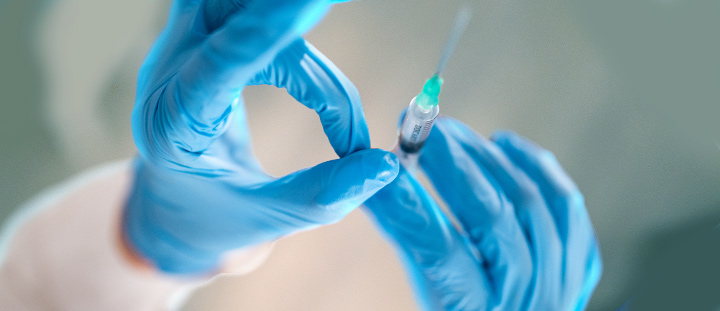
Protecting Healthcare Workers from Exposure

Designed for Safety, Backed by Regulation: The Case for CSTDs

In today’s healthcare environment, the use of traditional drug transfer methods can put the health of clinicians at risk. In addition, it can also put healthcare institutions at odds with evolving safety standards. Traditional open systems like vial spikes and standard syringes may not meet regulations such as USP <800>, NIOSH guidelines and national pharmacy board requirements. This can jeopardize workplace safety as well as institutional accreditation and funding.

Closed System Drug-Transfer Devices (CSTDs), on the other hand, are the gold standard when it comes to working with hazardous drugs. They are recognized and recommended by USP <800>, NIOSH, and the CDC, and many hospital accreditation bodies now expect their use when hazardous drugs are handled. In some jurisdictions, they’re no longer just recommended, but required.

Simplivia’s Chemfort® system meets international regulatory benchmarks for closed systems. The Chemfort® CSTD meets the NIOSH definition of a CSTD. In addition, Simplivia's products are FDA cleared and CE marked.

Using CSTDs like Simplivia’s Chemfort® isn’t just a key safety upgrade. It’s also a meaningful move to help ensure regulatory compliance, maintain institutional accreditation and reputation, and implement a hands-on commitment to best practices for hazardous drug handling.

The True Cost of Safety: Why CSTDs Make Financial Sense

When the costs of traditional drug delivery methods are compared with those of CSTDs, CSTDs can appear to be more costly. There are, however, unseen costs associated with traditional systems that must be considered.

For example, occupational exposure to hazardous drugs from surface contamination and potential litigation from exposure-related illness adds up. Over the long run, these indirect expenses can significantly exceed apparent savings from using traditional systems.

CSTDs prevent leaks and occupational exposure to hazardous drugs. They also minimize the risk of handling errors and help avoid expensive contamination-related mishaps or recalls. CSTDs also support drug vial optimization and extended beyond-use dating, reducing drug waste and maximizing inventory value.

With real-world data showing millions in potential savings, from reduced waste to fewer compensation claims, it’s clear that CSTDs are more than a safety measure. They’re a strategic investment in operational efficiency and workforce well-being.

Providing significant added value over traditional drug delivery methods, Simplivia’s Chemfort® CSTD is a market leader in both safety and long-term value. For institutions focused on quality care and cost control, CSTDs aren’t an added expense. In fact, they’re the smart choice.

The True Cost of Safety: Why CSTDs Make Financial Sense

Ease of Use and Standardization: Safety Without Slowing Down

Traditional drug delivery systems require manual steps and increase the risk of user error. But in a hospital pharmacy or oncology ward, speed matters. Over the course of a shift, small interruptions and errors from older, inefficient and awkward systems add up. The result is increased risk of exposure to hazardous drugs for both healthcare professionals and their workplace environment.

By contrast, Simplivia’s Chemfort® is a brilliantly simple CSTD that provides unmatched safety. Chemfort® is designed for ease of use, speed, and consistency. By offering standardized connections that work seamlessly with a wide range of vials, IV bags, and administration sets, systems like Simplivia’s Chemfort® help teams move quickly without cutting corners on protection.

Chemfort® is designed to be intuitive and require minimal training. Healthcare professionals can simply click and Chemfort®’s membrane-to-membrane connection ensures that a safe, closed connection has been established.

Chemfort®'s ergonomic design means reduced repetitive stress injury and fatigue, resulting in fewer errors, spills and accidental exposures. In addition, by containing the needle entirely in the septum, Chemfort® eliminates the risk of needle-stick injuries.

The overall effect of CSTD implementation is a smoother workflow, faster onboarding for new hires, and safety procedures that are easy to follow and repeat under pressure. For teams handling hazardous drugs, CSTDs like Chemfort® offer safer workflows without sacrificing efficiency.

Conclusion: The Case for Chemfort®

In modern healthcare, relying on outdated, open drug systems is a risk no facility can afford. The evidence is clear: Closed System Drug-Transfer Devices are a scientifically proven, cost-effective solution to protect healthcare staff and the wider environment from hazardous drug exposure.

At Simplivia, we’re committed to advancing brilliantly simple vial-to-vein drug delivery solutions that provide unmatched safety while meeting the highest global safety standards. Simplivia’s closed solutions integrate seamlessly and efficiently in real-world settings and aren’t just about meeting compliance checkboxes. They’re about making every work shift safer, every preparation cleaner, and every administration more secure.

Whether you’re looking to improve compliance or simply want to create a safer workplace, Our Chemfort® CSTD systems are designed to support you every step of the way.

For product information and a demo contact us.

Sources
1. Sessink, P., Nyulasi, T., Haraldsson, E., Rebic, B. Reduction of Contamination with Antibiotics on Surfaces and in Environmental Air in Three European Hospitals Following Implementation of a Closed-System Drug Transfer Device. Annals of Work Exposures and Health, Volume 63, Issue 4, May 2019, Pages 459–467.
https://academic.oup.com/annweh/article/63/4/459/537297
4. National Institute for Occupational Safety and Health (NIOSH). A Performance Test Protocol for Closed System Transfer Devices Used During Pharmacy Compounding and Administration of Hazardous Drugs.
A Performance Test Protocol for Closed System Transfer Devices

Share

Recent Posts